The Badr pact with Turkey, Qatar and Pakistan offers Indonesia defence equipment and capital, but tangled regional geopolitics pose a test
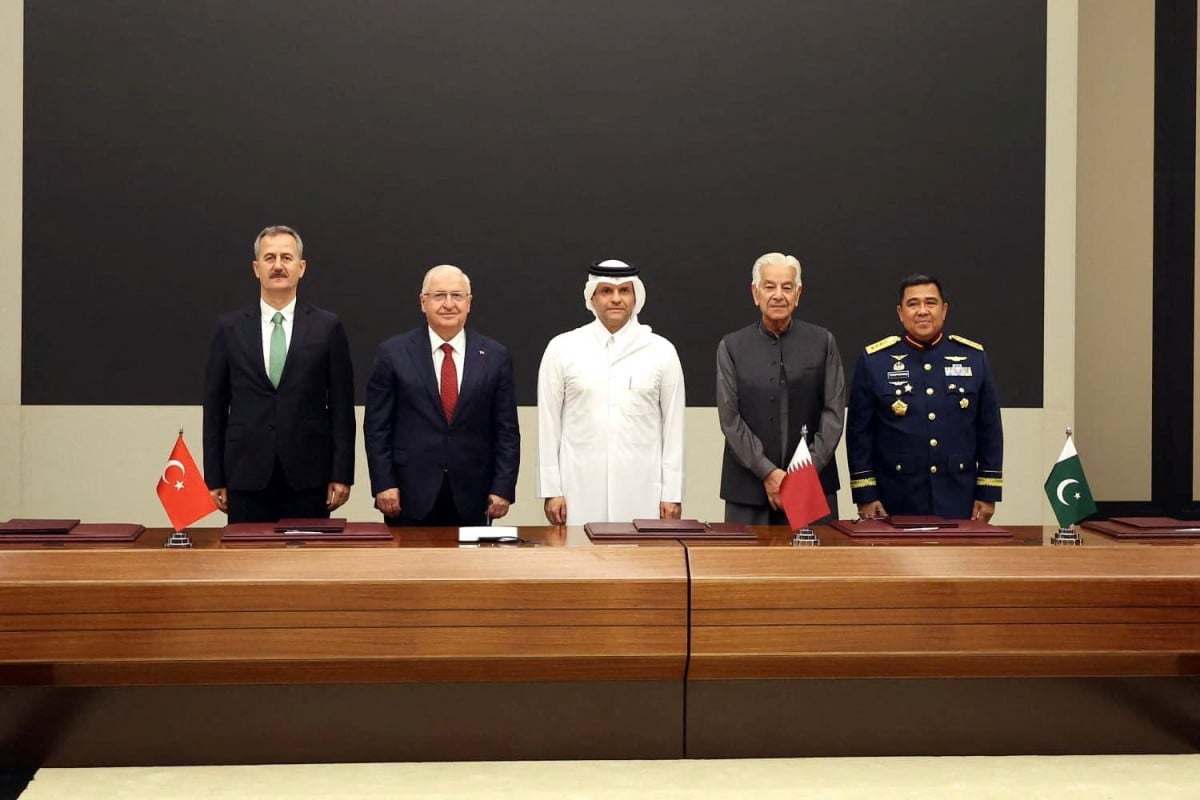
Indonesia could gain critical defence technology,
investment and export opportunities through a new multi-nation defence pact
with Turkey, Qatar and Pakistan, but analysts warn its success hinges on
turning high-level ambition into concrete projects.
The four Muslim-majority nations signed the Badr
Memorandum of Understanding in Doha on Wednesday. The agreement outlines a
framework for defence “cooperation and integration” across joint research and
development, training exchanges and industrial capability building.
“We believe that the Badr MOU will contribute to
transforming the complementary capabilities of Qatar, Pakistan, Indonesia and
Turkey into concrete projects,” Haluk Gorgun, head of Turkey’s Defence Industry
Agency, said in a statement last week.
Vahd Nabyl Achmad Mulachela, a spokesperson for
Indonesia’s Ministry of Foreign Affairs, told reporters on Thursday that the
pact would increase domestic production capabilities as Jakarta partners with
countries that “have the qualifications and compatibility to support” its
modernisation goals. He added that the agreement aligned with Indonesia’s
broader efforts to diversify its defence partnerships.
Tangible benefits
Analysts view the Badr agreement as a logical next
step rather than a sudden change, formalising ties among partners with existing
bilateral defence programmes.
“Through Badr, Indonesia benefits by gaining leverage
to secure access to weapons and other new defence deals with the countries in
the Middle East,” said Ahmad Rizky Mardhatillah Umar, an international
relations researcher at Aberystwyth University. Indonesia also stood to gain
from “technology transfer, particularly with Pakistan and Turkey”, he added.
Muhammad Zulfikar Rahmat, director of the
Indonesia-Middle East and North Africa division at Jakarta-based think tank
Centre for Economic and Law Studies, said that the tangible benefits fell into
three main areas: technology, capital and market expansion.
“The technology and know-how [will come] mostly from
Turkey. The second benefit is funding, because Qatar can invest and buy. The
third benefit is a bigger market for our defence companies, such as Pindad, PAL
and Dirgantara Indonesia,” Muhammad said.
Jakarta already has hardware agreements with Ankara.
In 2019, state-owned arms supplier Pindad signed a deal with Turkish
manufacturer FNSS to co-produce 18 Kaplan MT medium-weight tanks, which were
completed in 2024. Jakarta also signed an agreement last year to purchase 48
Turkish-made fifth-generation Kaan fighter jets, a deal estimated at over US$10
billion.
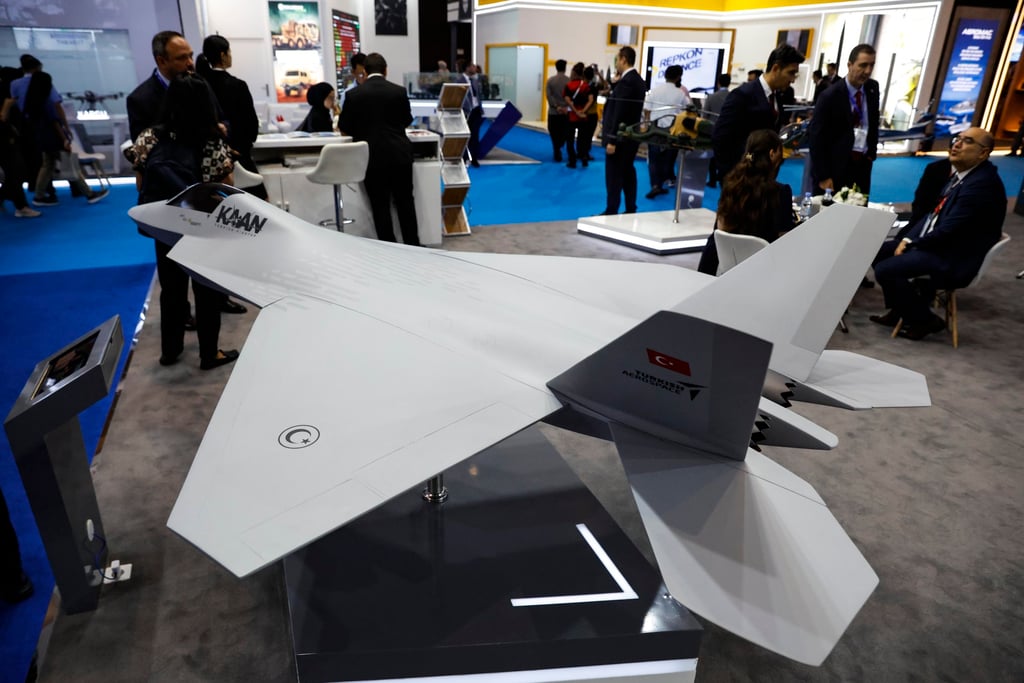
Visitors view scale models of Turkey’s Kaan combat
aircraft at the Indo Defense expo in Jakarta, Indonesia, in June 2025.
Indonesia previously sealed a deal to purchase 48 of the fifth-generation
stealth fighters from Ankara. Photo: EPA
Qatari capital is already flowing into Indonesia’s
defence industries. In January, Barzan Holdings, an investment arm owned by
Qatar’s Ministry of Defence, signed a US$2.3 billion joint venture with
Indonesian firm Republikorp to modernise the military’s land and maritime
systems.
In a statement on Saturday, Norman Joesoef, chairman
of Republikorp, said the venture “is an example of an industrial partnership to
develop defence industry cooperation within the framework of the Badr
initiative”.
“This collaboration opens up opportunities for joint
production, research and development, technology transfer and technical
training to strengthen the defence industry’s capabilities and build a more
resilient supply chain,” Joesoef, who attended the MOU signing event in Doha,
said, as cited by state news agency Antara.
Cooperation with Islamabad is also gaining momentum.
Marina Ika Sari, a researcher with the Asean Studies Programme at the
non-profit think tank The Habibie Centre, noted a marked increase in high-level
exchanges since President Prabowo Subianto visited Pakistan in December,
followed by bilateral ministerial visits and meetings with the Pakistani Air
Force chief of staff in Jakarta.
“Indonesia is considering procuring 40 JF-17 Thunder
fighter jets from Pakistan, but the process is currently still in the
exploratory stage,” Sari said. “Pakistan has experience in producing and
maintaining defence systems such as military aircraft, warships and land-based
weapons.”
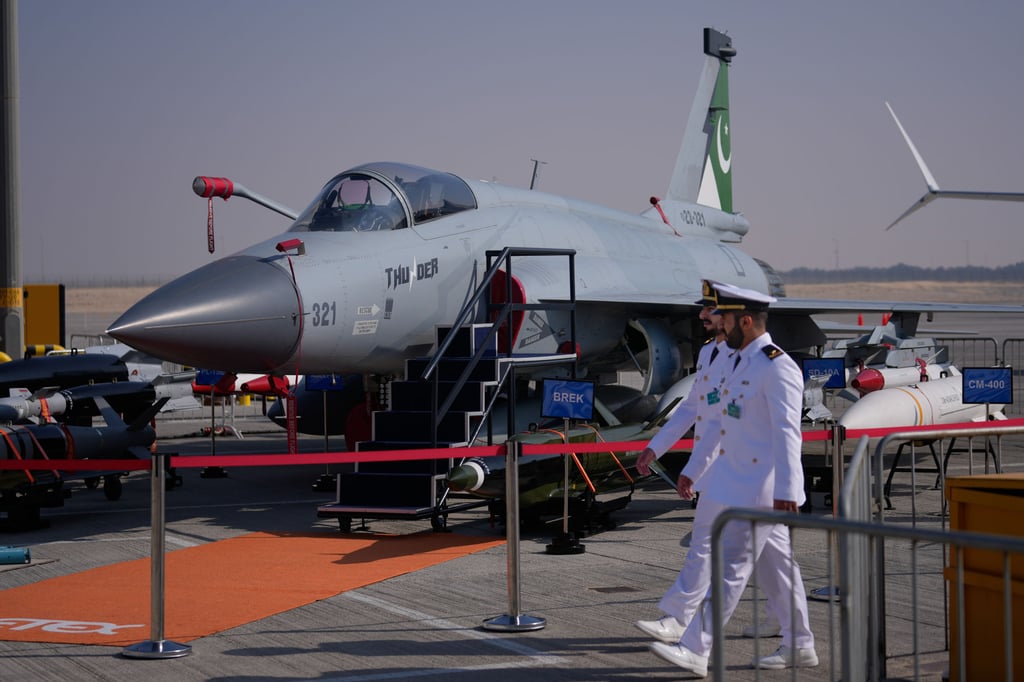
A Pakistani Air Force JF-17 Thunder on display at the
Dubai Air Show, United Arab Emirates, in November. Indonesia is currently
exploring a potential deal to purchase up to 40 of the fighter jets from
Islamabad. Photo: AP
But integrating different platforms into Indonesia’s
existing inventory presents logistical challenges.
“The problem is that the JF-17 is made together with
China, so there is a question of how it will fit with our Rafale and Kaan
jets,” Muhammad said.
Indonesia has ordered 42 Dassault Rafale fighter jets
from France – six of which have been delivered, with 18 more due between 2027
and 2029 – while also purchasing defence equipment from South Korea, Italy and
India.
Not a military bloc
Experts agreed that Badr was an industrial and
technical framework rather than a collective defence pact, meaning it did not
violate Indonesia’s long-standing bebas dan aktif (independent and active)
foreign policy doctrine.
Nonetheless, Jakarta must navigate external perceptions
carefully.
“Pakistan maintains close ties with China and plays a
strategic role in the conflict between the United States and Iran. Turkey and
Qatar have their own positions in the Middle East. Other countries such as
Iran, the United States or Israel might perceive Indonesia as moving closer to
the Turkish bloc,” Ahmad said.
“It can be easily clarified that this defence
cooperation is not an alliance or a mutual defence agreement. It is merely a
step-up of an existing bilateral framework.”
Muhammad said that while Badr signalled Jakarta’s
aspiration to play a more proactive role in the Islamic world beyond diplomatic
advocacy on Palestine, it should not be misconstrued as an “Islamic military
bloc”.
“Indonesia still needs to keep good relations with the
Association of Southeast Asian Nations, the US and China. In the end, our image
in the Muslim world depends on whether Badr can deliver real results.”
Sari agreed, adding that Jakarta must avoid being
treated simply as an end-market: “Badr’s success will be determined by
Indonesia’s diplomatic ability to prioritise substantive projects that align
with Indonesia’s defence needs.”
***
By Resty Woro Yuniar
Resty Woro Yuniar is a Jakarta-based reporter who covers
Indonesian current affairs and Southeast Asia's tech scene. She was previously
Indonesia correspondent at the BBC and tech reporter with The Wall Street
Journal.
This article was published in South
China Morning Post on 28 Oct 2026.